The first decision for an ethnographic museum visit in Cluj is which site you mean. The open-air Romulus Vuia park and the indoor museum in the city centre belong to the same institution, but they are different destinations. A car can help connect the outdoor visit with your accommodation or another genuine journey; it does not remove the need to check the entrance and allow time on foot. This guide is for planning that park visit, not for promising an attraction ticket, a parking space or access to every building.
Save the park, not just the museum name
Cluj's municipal tourism website identifies two sections of the Ethnographic Museum of Transylvania. The indoor collection is at Reduta Palace on Memorandumului Street, number 21. Its separate listing places Romulus Vuia Ethnographic Park on Aleea Muzeului Etnografic. Searching only the institution's general name can therefore produce the wrong arrival point. Save the full park name and verify that the map result corresponds to the outdoor site before setting off.
Keep the institution's postal or office address separate from visitor access. If a booking, exhibition announcement or event page supplies an entrance, use the instructions for that specific visit. Do not change destination while driving because a search result appears more prominent. Stop safely and resolve the address first. A wrong museum arrival is usually a planning inconvenience, not a reason to hurry across the city.
For someone already staying in central Cluj, compare the entire outing by car with an independently confirmed transport alternative. If you are collecting a rental for several days, the Cluj-Napoca car catalogue lets you compare suitable offers. Vrenty Car is an affiliate information site; Localrent handles reservations and the selected rental company provides the car. Museum admission and transport are separate arrangements.
Understand what makes the outdoor visit different
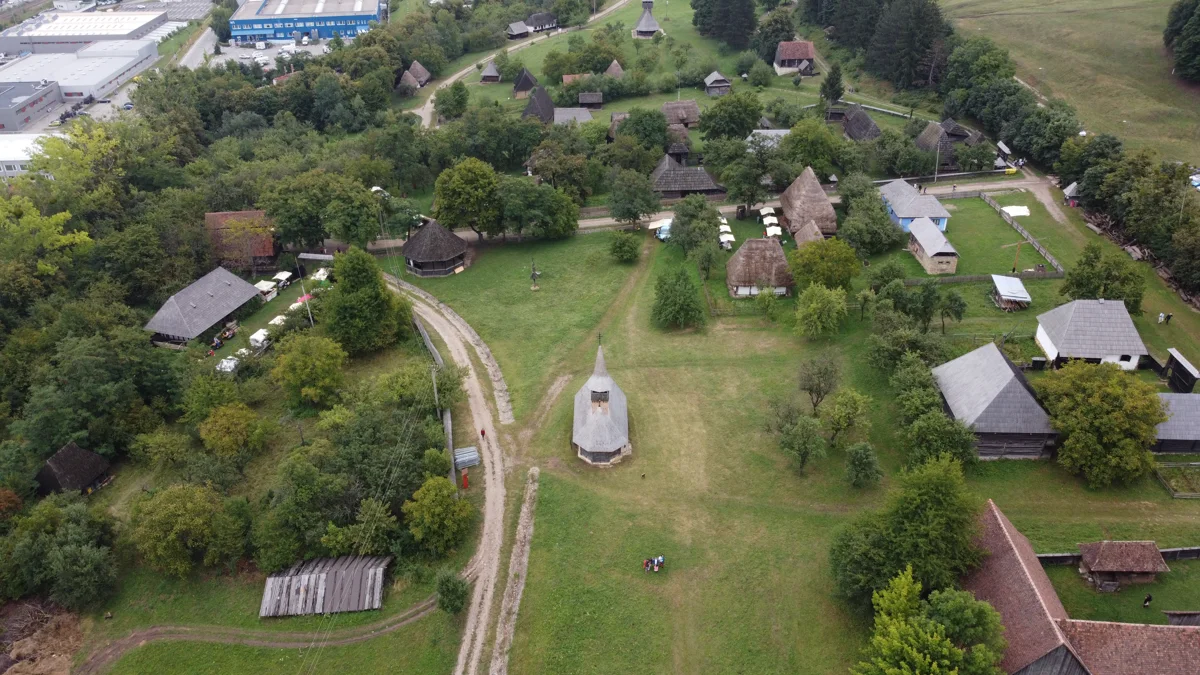
The municipal description presents the park as an open-air collection of regional households, traditional buildings, workshops and other elements of rural life. It dates the park's establishment to 1929 and connects its name with the museum's founder, Romulus Vuia. Those facts explain why the visit is about the relationship between buildings and their setting, rather than simply moving through a sequence of indoor display cases.
Choose a question to explore instead of trying to photograph every structure. You might compare the way a household is organised, look at differences in roofs and entrances, or follow the relationship between living and working space. These are observation prompts, not a claim that a particular building is currently open. Read the interpretation and ask staff when a detail is unclear rather than inventing a story from the appearance alone.
Leave room to enjoy the outdoor setting between exhibits. A list of buildings is not an instruction to rush from one doorway to another. If a workshop, demonstration or guided activity is important to your group, confirm that it is actually offered on your date. The fact that a museum hosts events does not mean an event, craft demonstration or wedding is available for every ordinary visitor.
Check seasonal arrangements before committing the drive
Opening information needs a date as well as a source. When reviewed on 6 November 2026, the municipal listing supplied a timetable and prices, while other public listings differed. The museum's own website could not be read during this check. This article therefore does not present one of those figures as a guaranteed current schedule or admission charge. Contact the museum or consult its current official notices before making a dedicated journey.
Ask three distinct questions: whether the park is open on your chosen day, when visitors must enter, and when they must leave. Last admission can be earlier than closing, and an outdoor visit needs more than a few remaining minutes. Ask separately about any exhibition, building or event that motivates your trip. A general park opening answer may not settle access to a specific interior.
Write the confirmed information into the day's plan and keep a backup that does not require another time-sensitive admission. If you cannot confirm access, decide whether you are comfortable postponing. Do not treat an unanswered message or an old photograph of an open gate as confirmation. A flexible trip can use another day; a visit tied to an airport departure needs a firmer decision before leaving accommodation.
Plan the arrival and the parked-car stage separately
Set the destination while stationary and review the final approach before you drive. A routing app identifies a way toward its chosen point; it does not establish which entrance is currently used or where a visitor may leave a vehicle. Follow signs and staff instructions at the site. If a suggested turn appears restricted or leads away from a public road, stop and check rather than following it to the end.
This guide has not verified a current parking tariff, reserved visitor space or guaranteed drop-off area. Ask about those arrangements if they matter to your group. A photograph showing a car near a building is not evidence that visitors may park there today. At arrival, keep gateways and access routes clear and choose only a lawful place. If the immediate area is full, allow time to find an acceptable alternative.
Before walking away, note where the car is and what any payment or time limit requires. Keep essential items with you and avoid leaving visible valuables. If one passenger needs a shorter walking approach, ask about a permitted set-down point rather than assuming that a blue map line reaches a usable entrance. The return walk belongs in your time budget just as much as the drive.
Choose a car for the whole Cluj stay
This museum outing is not a reason by itself to reserve a large SUV. Choose the vehicle around all passengers, luggage and the accommodation's parking access. A manageable car with a familiar transmission can suit a city-based trip, provided it meets your real needs. Compare the actual dimensions and luggage information when a narrow hotel entrance or several large bags are involved; category names alone do not settle those questions.
The automatic car rental guide covers transmission, substitutions and the collection checks in detail. For this outing, the important connection is familiarity: know the controls, arrange navigation and start with a clear destination. A museum visit should not be the moment you first try to work out an unfamiliar selector, parking brake or dashboard message while joining traffic.
Localrent's Romania conditions, checked on 6 November 2026, restrict use to paved public roads. Vehicle size or transmission does not expand that permission. Confirm any uncertain access with the supplier, and do not use a forest track or unofficial approach merely because it appears to shorten the journey. The car takes you to an appropriate arrival point; exploring the museum grounds is a separate activity.
Match the outdoor walk to the group
Plan for time outdoors even if your main interest is the buildings. Check the weather close to departure and take clothing and footwear appropriate to the conditions. The archival photograph on this page helps identify the setting, not the weather or surface conditions of your visit. Rain, wind, heat or an earlier sunset can change how long the group wants to remain outside.
For limited mobility or a pushchair, contact the museum about the actual route, gradients, surfaces, steps and facilities. Avoid reducing accessibility to a single yes-or-no label. A person may manage the approach but not a particular building, or enjoy a shorter circuit while another member of the group explores further. Agree a meeting point and a practical return arrangement before splitting up.
With children, choose a few observations they can make without entering restricted areas: compare building shapes, notice gates or look for the relationship between a house and its working space. Follow staff rules about touching, photography and access. Do not assume an open-air setting makes historic structures playground equipment. A shorter, engaged visit can be more useful than extending the route until everyone is tired.
Use one of three realistic day structures
A focused park morning is the simplest option: travel after confirming access, visit at the group's pace, then return for lunch or a relaxed city afternoon. This works well when you want the museum to be the day's main activity. It leaves room for an unexpectedly interesting exhibit, a slower arrival or a change in weather without forcing a second attraction into the remaining time.
A combined indoor-and-outdoor museum day is a different plan, because you must check each section's opening, admission and transport separately. The shared institutional name is not proof of a combined ticket or identical hours. Build a pause between the visits, and decide which is essential if time shortens. Do not drive to the park simply because the central museum is closed without checking the outdoor section first.
A rental-collection day can include the park only when the handover and access times genuinely allow it. Keep the reservation inspection and first drive unhurried. For the arrival procedure, use the Cluj Airport collection guide. If a flight or baggage delay compresses the day, remove the optional museum stop rather than trying to recover the lost time on the road.
Choose alternatives by activity, not by a longer checklist
If your group primarily wants a relaxed outdoor visit within Cluj, compare the park with the botanical garden outing rather than automatically booking both. One concentrates on traditional buildings and cultural interpretation; the other has a different subject and visitor layout. Check each independently, then choose the activity that fits the weather, interests and available time. Similar travel distance does not make two attractions interchangeable.
Avoid adding a distant day-trip destination just to make the car feel worthwhile. A rental used for several days does not need an ambitious mileage target on each one. If the museum visit finishes earlier than expected, a meal or return to accommodation can be a perfectly sensible use of the remaining afternoon. There is no need to turn an optional outing into a race between closing times.
If you decide to change plans after arrival, make that decision while parked. Update the people travelling with you and the accommodation if necessary, then review the route before moving. Keep any fixed return appointment intact. Flexibility means having a genuine alternative, not relying on every attraction to remain available whenever the first plan stops working.
Separate the outing budget from the rental balance
Use a short spending list: the chosen rental period, fuel for your actual route, any lawful parking charge and confirmed admission or event tickets. Leave uncertain figures as questions rather than filling them with old prices from a directory. A small entry charge from a historic listing can be misleading if a tariff changed or a special event uses a different ticket.
Keep money needed as rental security separate from money available to spend. Check the offer's payment and document requirements before collection; an online advance does not resolve the balance or security method. For the museum, confirm payment methods if you depend on a particular card or have no cash. Neither this guide nor a car reservation guarantees how an unrelated attraction accepts payment.
An illustrative comparison can help: using a car already rented for the week has a different incremental cost from collecting one solely for a museum visit. In the second case, include the minimum rental period and time spent collecting and returning. Compare that total with a real alternative transport quote if relevant. No fixed saving is assumed, and no current car price is represented here.
Leave enough room for the return
Set a departure point that allows the walk back to the vehicle, any parking payment and the drive to your next confirmed address. If the car is due back that day, add the supplier's handover and fuel requirements. Museum closing is not the same as the time you can reach a rental return point, especially if you still need to retrieve bags from accommodation.
If a delay affects the agreed return, contact the supplier promptly rather than assuming a short extension is free. Keep the communication and revised instructions. At the end of the outing, the useful test is simple: you visited the intended site, had time to understand what interested you and returned without sacrificing an essential appointment. Reaching every building or fitting in another destination is optional.
Questions & answers
Is Romulus Vuia park the museum on Memorandumului Street?
No. The institution has a separate indoor section at Reduta Palace and an outdoor ethnographic park. Confirm the full site name and visitor entrance before navigating.
Are opening hours and parking guaranteed here?
No. Public listings differ and current operator information was not readable during this check. Confirm your date, last admission, visitor access and parking arrangements directly before travelling.
Do I need an SUV for the park?
Choose a car for your passengers, luggage and the whole stay. An SUV does not authorise unpaved or restricted access; use permitted public roads and an appropriate visitor arrival point.